
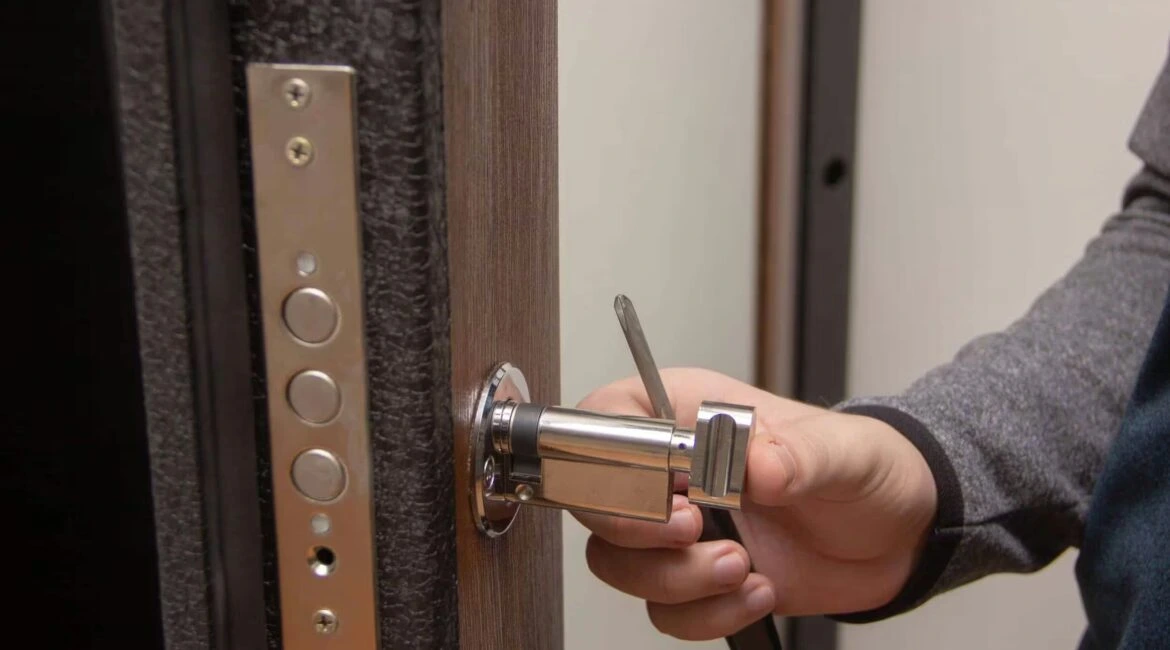
In Melbourne’s ever-changing crime landscape, securing your front door has never been more crucial. With local burglary rates climbing (over a 25% surge in Victoria recently), properly installing door locks in Melbourne is a simple yet powerful first step to deter break-ins. Think of a sturdy deadbolt as your home’s bodyguard – it’s not flashy, but it’s reliable.
When you slam and lock your door correctly at night, you’re not just doing a habit; you’re actively keeping intruders out. In fact, studies show most burglars target easy access points: up to 80% of attempted break-ins involve unlocked doors or windows. By installing door locks properly, you turn that front door from an open invitation into a hard nut to crack.
The Melbourne Break-In Boom: Why Locks Matter
Melbourne’s property crime stats are eye-opening. Recent Victoria Police data revealed one home is burgled every 20 minutes in Victoria, and about a third of those thefts involved no forced entry. That tells us something uncomfortable: many break-ins happen simply because doors or windows are left unlocked. This is exactly where Installing Door Locks in Melbourne properly starts to make a real difference, turning careless opportunities into closed doors.
Even more alarming, Crime Stoppers Victoria reports that nearly 80% of burglaries involve entry through an unlocked gap, or the offender leaves once they realise the home is secured. A properly installed deadbolt lock can transform your door into a fortress. Visible, solid locks send a clear message to intruders: this home isn’t worth the effort.
This trend isn’t limited to so-called “rough” suburbs. Upscale areas like Stonnington recorded more than 930 burglaries per 100,000 people last year, often by fast, opportunistic thieves. These offenders aren’t master lock-pickers; they’re hunting for unlocked doors and weak points. Research from the Australian Institute of Criminology shows most burglars simply walk through unlocked doors or windows and spend only seconds inside. When locks are strong and correctly fitted, that easy win disappears. That’s why Installing Door Locks in Melbourne isn’t just a safety upgrade—it’s a clear signal that says, “Go away, this place is locked up.”
How Proper Locks Deter Burglars
A lock is more than metal and keys; it’s a psychological barrier. I like to think of it as a bouncer at a nightclub door—if there’s resistance, most troublemakers don’t even try. Deadbolts, in particular, deliver that firm “not today” message. Compared to flimsy spring bolt locks found in standard doorknobs, a true deadbolt drives a thick steel bolt deep into the door frame. Kicking or prying it open takes noise, time, and effort, all of which burglars hate. This is why Installing Door Locks correctly plays such a powerful role in stopping break-ins before they even start.
Victorian crime prevention guides back this up. They consistently highlight that good-quality, Australian Standard locks on doors and windows make burglaries far more difficult. NSW Police also recommend upgrading to deadlocks on all external doors, securing sliding doors with bolt locks, and keeping keys out of sight. Lockwood, one of Australia’s most trusted lock manufacturers, notes that most home burglaries are opportunistic, and solid locks often cause offenders to give up and move on.
By focusing on Installing Door Locks properly, you force any attempted break-in to involve tools, noise, or brute force. That’s exactly what burglars want to avoid. In fact, research shows around 14% of attempted burglaries in Victoria fail the moment an offender hits a locked door. Every strong, well-fitted lock becomes another obstacle—one that could stop a crime in its tracks.
Types of Door Locks: Choosing the Right One
Not all locks are created equal, and the best choice depends on your door and needs. Below is a quick rundown of common lock types to consider for your Melbourne home:
| Lock Type | Description | Best For |
|---|---|---|
| Single/Double Cylinder Deadbolt | Steel bolt thrown into door frame; double-cylinder means key needed on both sides. | Front/back entry doors (high security). Prevents jimmying or lock-picking. |
| Mortise Lock | Integrated lockset cut into door edge (common in older or higher-end doors). | Solid wood or metal doors. Very tough, multi-function locking. |
| Smart Electronic Lock | Digital keypad or app-controlled lock. | Tech-savvy households; convenience. Still use a mechanical deadbolt for backup. |
| Keyed Knob/Lever Lock | Standard door lock with a keyed cylinder. | Basic interior or low-risk exterior doors. Must be paired with secondary lock outdoors. |
| Security Screen/Chain Locks | Extra security door or internal chain. | Supplementary barriers; keep doors partly open to talk. They’re not strong enough alone for exterior doors. |
Each lock has pros and cons. Deadbolts (especially double-cylinder) are rated very high for burglary prevention – they jolt a metal bar deep into the frame. Smart locks add convenience (and can deter tech-savvy thieves if they know you have cameras or notifications) but rely on electronics. It’s crucial with smart locks to ensure strong physical backing (so a deadbolt still secures the door) and good Wi-Fi in case of signal issues. Meanwhile, a simple security screen door with a quality latch can add an extra layer by protecting your front door from brute force and allowing ventilation.
Tip: When shopping for locks in Melbourne, look for Australian Standards (AS 4145 for deadlocks, AS 1905 for screen doors, etc.). Brands like Lockwood emphasise their products meet these standards. Also consider anti-snap or anti-pick cylinder locks – they’re built to resist common break-in tricks. A smart move is to use two locks on main doors: for instance, a deadbolt plus a handle lock. If one fails, the other still slows the thief.
Installation Counts: Details That Make a Difference
Even the best lock won’t protect you if it’s installed poorly. Proper installation is everything—it ensures the lock can handle force the way it was designed to. This is where Installing Door Locks the right way really matters. For example, the strike plate (the metal bracket the bolt slides into) should be secured with long screws, ideally 75–100mm, so they bite into the wall stud rather than just the door jamb. That one detail alone makes kicking a door in far more difficult. Just as important, the door frame itself must be solid. In older Melbourne homes, reinforcing the frame around the lock area can dramatically improve strength.
Alignment is another detail people often overlook. When you turn the key or thumb latch, the bolt should slide smoothly and fully into the strike plate. If it scrapes the edge or only partially extends, it becomes much easier to force back. During installation, double-check the lock’s bevel—the curved face of the bolt—is facing the right direction so it retracts properly. These may sound like small details, but skipping them can make a brand-new lock almost useless.
Here are some quick installation tips for Melbourne homeowners:
- Check the door and frame first: A hollow or warped door weakens any lock. Always start with a strong door.
- Use the right tools: Drill proper pilot holes, allow enough depth for the bolt, and follow the lockmaker’s template carefully.
- Anchor hard: Secure strike plates and hinges with long screws into studs. Reinforced metal kits can add extra strength.
- Test fully: Lock and unlock several times. Gently push the door when unlocked to check for jamming or misalignment.
- Don’t forget other doors: Back, side, garage, and shed doors deserve the same attention. Many break-ins start there.
Even if you’re confident with DIY, consulting a licensed locksmith can be a smart move. They make sure everything lines up, the lock sits flush, and the door thickness suits the hardware. Whether you handle it yourself or call in a pro, the goal of Installing Door Locks is simple: make the door solid. A well-installed lock forces burglars to rely on noise, tools, and time—three things they absolutely want to avoid.
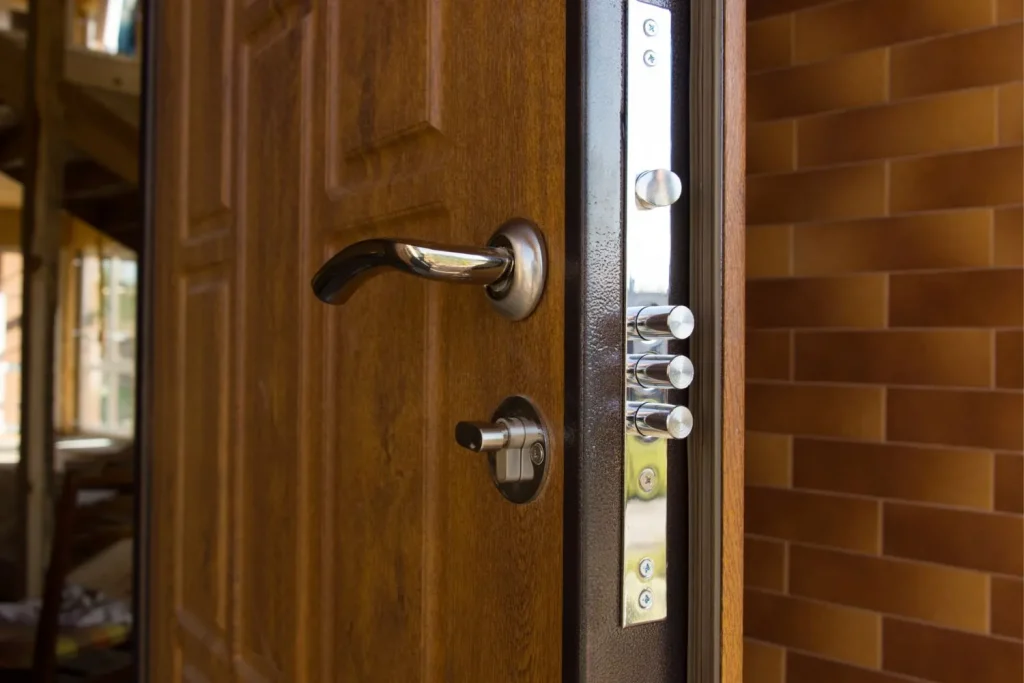
burglars think twice before choosing your house.
Beyond the Lock: Layering Security
Installing door locks in Melbourne should be part of a bigger home security strategy. Even the best lock only works if you use it consistently and as part of a locked-down routine. Think of your locks as the first line of defence, backed up by other measures:
- Lighting: Motion-sensor lights around entryways keep creeps visible. Victims of burglary are often caught on camera when tripping lights.
- Alarms and Cameras: A good home alarm (visible siren box) and cameras are the second wall. Studies show 60% of burglars avoid homes with visible alarms or cameras. In Victoria, an alarm or security sign is a known deterrent.
- Neighbourhood Watch: Get involved with local watch groups. Busy neighbours watching out can scare off opportunists (good informal surveillance works).
- Routine: Always lock behind you – even if you’re in the garden for 2 minutes. Police and Crime Stoppers emphasize that the simplest tip is “Are all doors and windows locked?” every time you leave home.
- Landscaping: Trim bushes near windows/doors. Crime Stoppers advises no hiding spots around entrances. Clear sight lines mean prying eyes (or cameras) can spot someone lurking.
- Security Screens: Many Melbourne homes add security screen doors with locks. These not only stop burglars but let you have the front door open for airflow (Aussie summers!). A mesh security door with its own lock adds another physical barrier.
- Backup Keys: Never hide a spare key under the mat or pot. Give spares to a trusted neighbour instead. An “open house” is an invitation for theft.
Each of these layers works hand-in-hand with your door locks. But remember, it all starts at the latch. If your door is locked and solid, 14% of would-be burglars will give up immediately. If all these are in place, you’ve maximized your deterrence.
Conclusion
At the end of the day, installing door locks in Melbourne isn’t glamorous, but it is effective. A properly installed, high-quality lock is like an insurance policy you feel every time you flick the latch and hear it click. It may not make headlines, but it sure stops the headlines from happening to you.
So, take a few minutes this weekend: check your front, back, garage, and any glass doors. Are they fitted with solid deadbolts or equivalent locks? Are the strike plates screwed in deep? If not, it’s time to upgrade. Talk to a reputable locksmith or hardware store and make installing door locks in Melbourne a top priority.
By doing so, you’re not just following a trend – you’re using a proven method to make your home safer. Melbourne’s burglary rates may be climbing, but a locked door is a low-tech, high-impact weapon in the homeowner’s security arsenal. Keep it locked, keep it solid, and rest easy knowing you’ve done the smart thing for you and your family. Your home won’t be the easy target.
Stay safe, stay vigilant – and lock it properly.
Frequently Asked Questions
What is the most secure type of door lock?
Generally, a high-quality deadbolt (especially a double-cylinder deadbolt) is considered very secure. It extends a thick steel bolt into the frame, making forced entry much harder. Always pair it with a sturdy frame and long screws for maximum effect.
Can smart locks prevent burglaries?
Smart locks add convenience (keyless entry, alerts, etc.) but shouldn’t replace a good mechanical deadbolt. They can deter tech-savvy thieves if paired with alarms or cameras, but ensure they’re installed correctly and have backup batteries or keys.
How do I know if my locks are installed properly?
A properly installed lock should operate smoothly and fully extend the bolt. Check that screws on strike plates reach the wall stud and that the door frame isn’t damaged. If it feels loose or misaligned, have a locksmith adjust it.
Should I hire a locksmith to install locks?
If you’re handy, you can install deadbolts by carefully following instructions. However, locksmiths ensure the job is done right (frame reinforcement, precise fitting). For complex locks or warranty reasons, professional installation is recommended.
How often should I change or maintain my door locks?
Check locks yearly: lubricate moving parts with graphite or silicone, and tighten any loose screws. Replace locks (or rekey) when keys are lost, after a break-in attempt, or if locks show wear. Moving into a new home is a good time to change all locks for peace of mind.